Under-Eye Bags & Tired Eyes
Under-Eye Bags & Tired Eyes
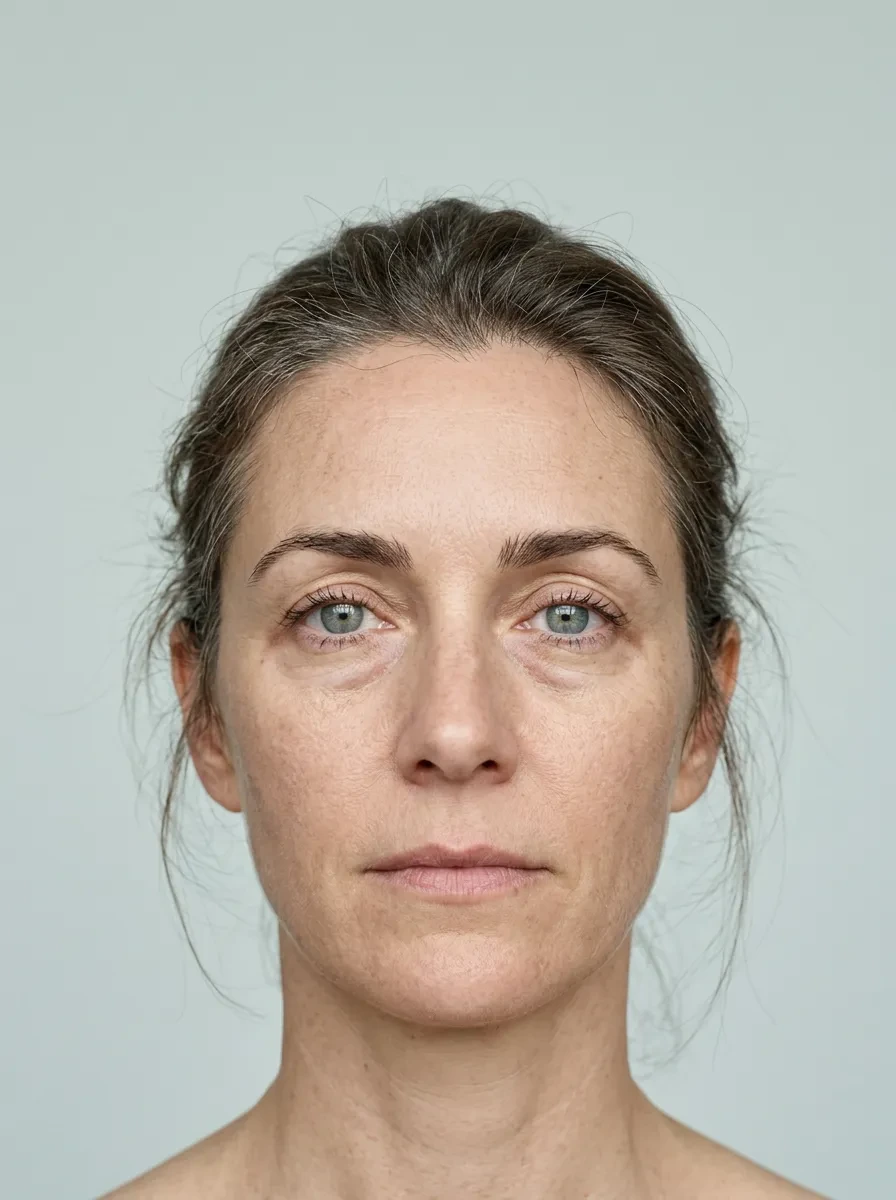
Bags under the eyes that no amount of sleep changes, and a tired look that arrives before you do. Most people notice it in a photograph, or on the first video call of the morning. There is puffiness under the eyes whether they slept or not. Below it sits a shadow that reads as dark circles. The face looks tired when it is not. Concealer helps until mid-afternoon. It is one of the most common concerns in the consultation room, and one of the most often misdiagnosed, because more than one thing can produce the same look.
Under-Eye Bags & Tired Eyes
Under-Eye Bags & Tired Eyes
Bags under the eyes that no amount of sleep changes, and a tired look that arrives before you do. Most people notice it in a photograph, or on the first video call of the morning. There is puffiness under the eyes whether they slept or not. Below it sits a shadow that reads as dark circles. The face looks tired when it is not. Concealer helps until mid-afternoon. It is one of the most common concerns in the consultation room, and one of the most often misdiagnosed, because more than one thing can produce the same look.
WHAT CAUSES IT
Why it happens
Several things make the under-eye area look tired. Each one needs a different treatment. This is why the cause is assessed first, before any treatment is chosen. The same look can come from different causes, and the right treatment follows the cause.
01
Fat that has pushed forward
The fat that cushions the eye has bulged through a weakened lower lid, making a true bag that is there at rest and worse in the morning.
02
A hollow beneath
The groove between the lower lid and the cheek has deepened. The cheek's fat thins and drops with age. That groove casts a shadow, and the shadow reads as dark circles.
03
Loose skin
The lower-lid skin has thinned and crinkled, so it folds and holds shadow even when there is no bag beneath it.
04
Pigment or thin skin
In some people the darkness is the colour of the skin itself, or vessels showing through very thin skin, and no volume or surgery changes that.
WHAT ACTUALLY TREATS IT
What actually treats under-eye bags in Barrie
Several different things make the under-eye area look tired, and each one has a different answer. Some of those answers are surgical and some are not, and both routes are available here. The consultation decides which one applies to you.
Blepharoplasty
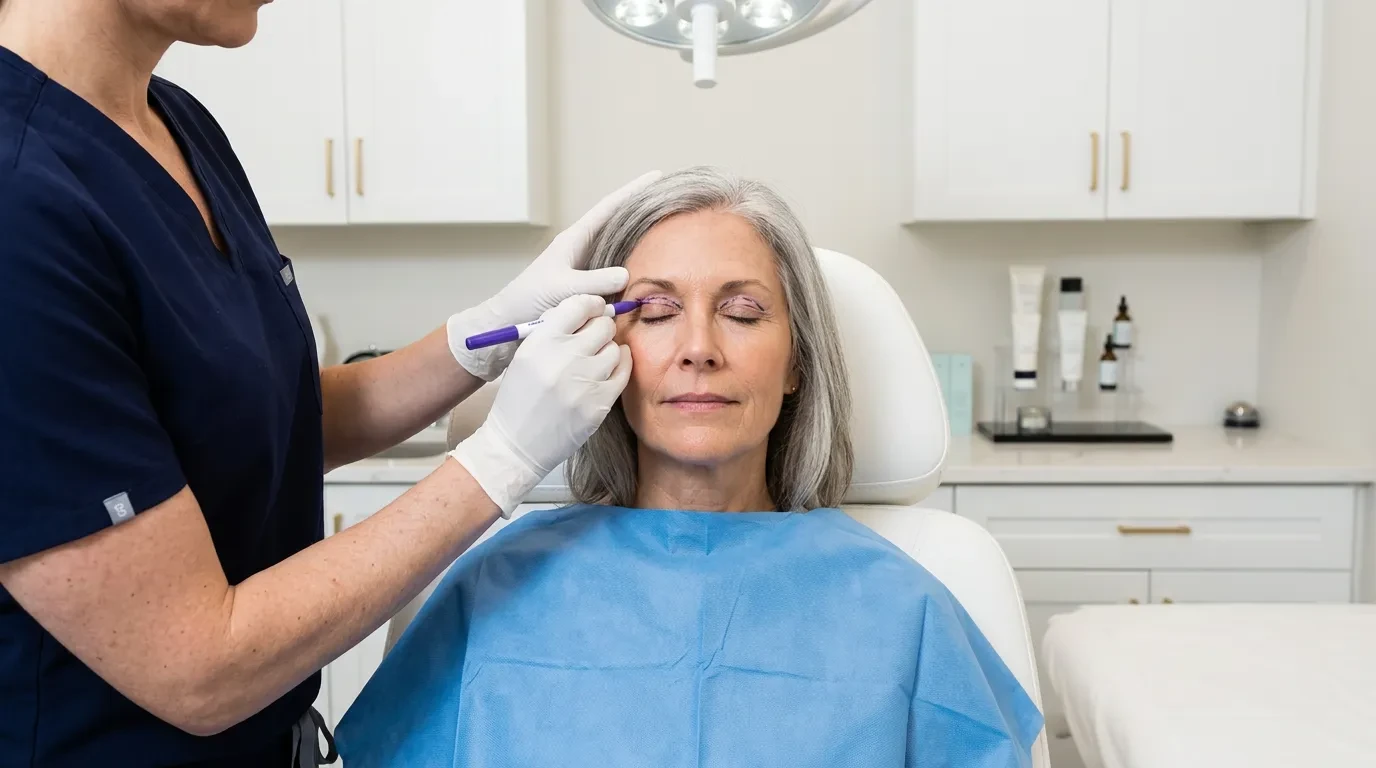
Lower eyelid surgery that removes or repositions the fat that has bulged through a weakened lower lid, and trims the excess skin. It is the correction for a true bag.
People with a bag that is there at rest and worse in the morning. Filler placed beside a true bag makes it look worse, which is why the cause is settled before anything is booked.
The work is done through an incision just under the lashes or inside the lid. The fat is removed or repositioned and loose skin is trimmed. Canthopexy is added when the lower lid needs support.
Most patients are back at desk work in seven to ten days. Bruising is largely gone by two weeks and the last swelling settles over a month or two. The result typically holds for ten years or more.
Under-Eye / Tear Trough Filler
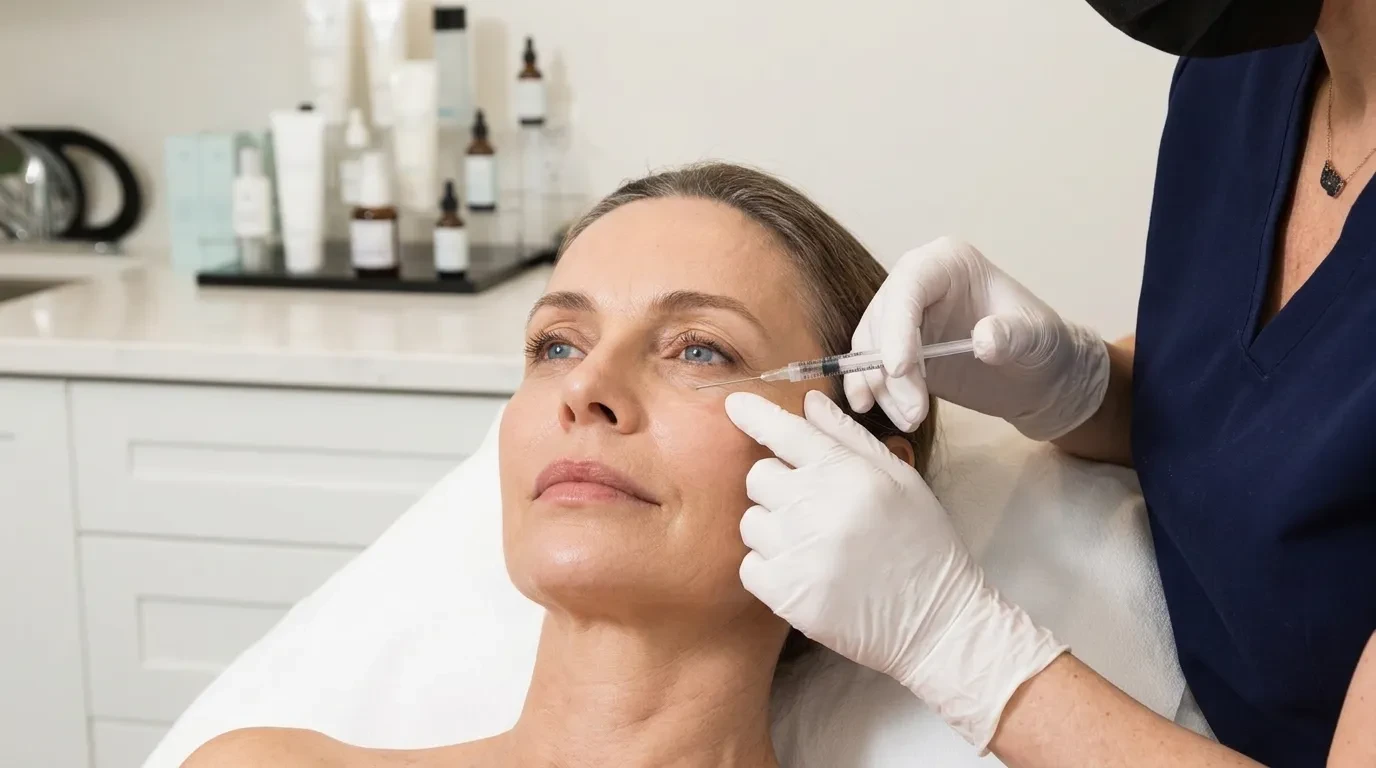
A small amount of a soft product placed deep in the groove between the lower lid and the cheek. It is done in the office, and Dr. Tumi performs all injectables himself.
People with a hollow that casts a shadow rather than a bag that sits forward. Beside a true bag it is the wrong treatment and makes the bulge look worse.
The product fills the deepened groove so the shadow that reads as a dark circle is reduced. It is not permanent.
A few days of swelling are possible, and the result shows once that has settled at about two weeks. It lasts twelve months or longer.
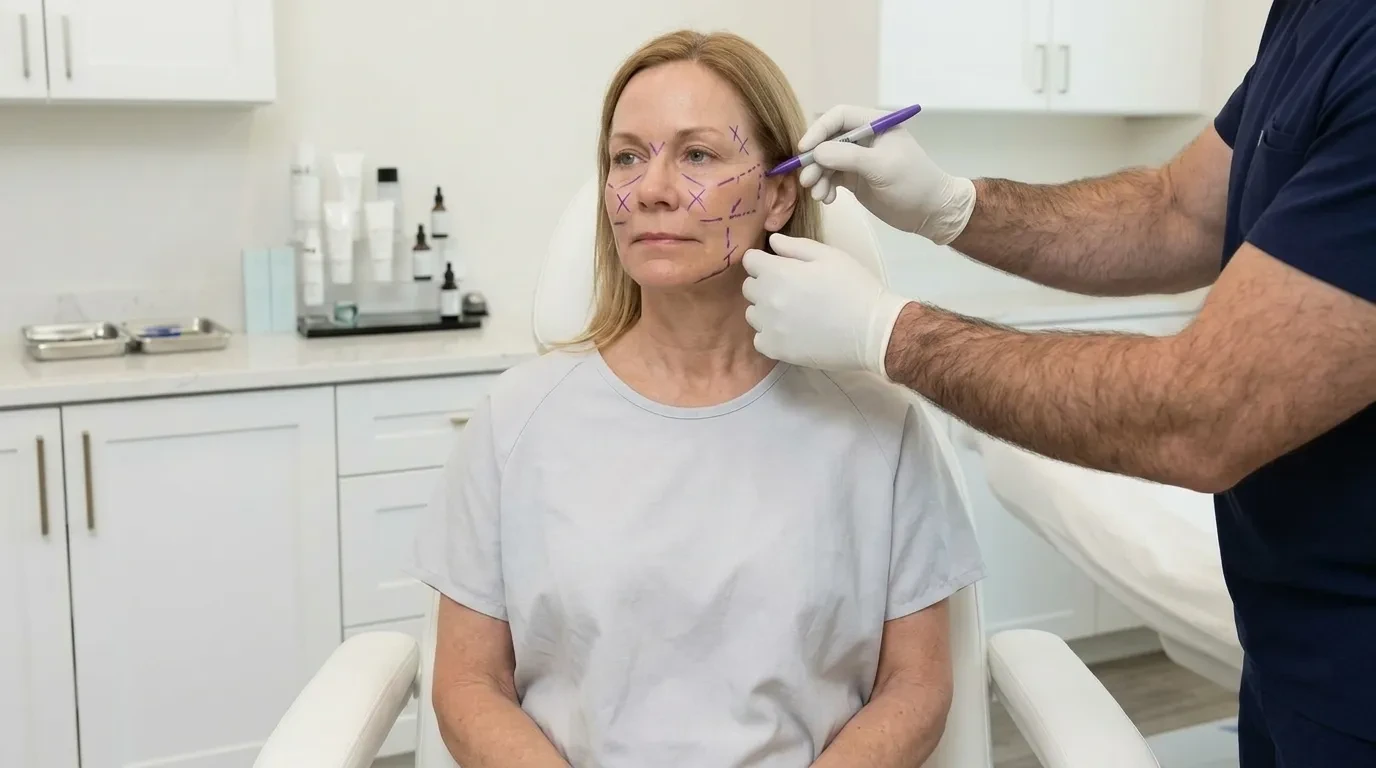
Facial Fat Grafting
A surgical option for the tear-trough hollow. It fills the groove that reads as a dark shadow under the eye.
People whose problem is volume loss rather than fat that has pushed forward into a bulge.
Volume is added into the hollow rather than removed from a bulge, so the groove casts less shadow.
Whether grafting or filler suits your hollow is decided at the consultation, with you upright and looking ahead. The timeline for your case is confirmed there.
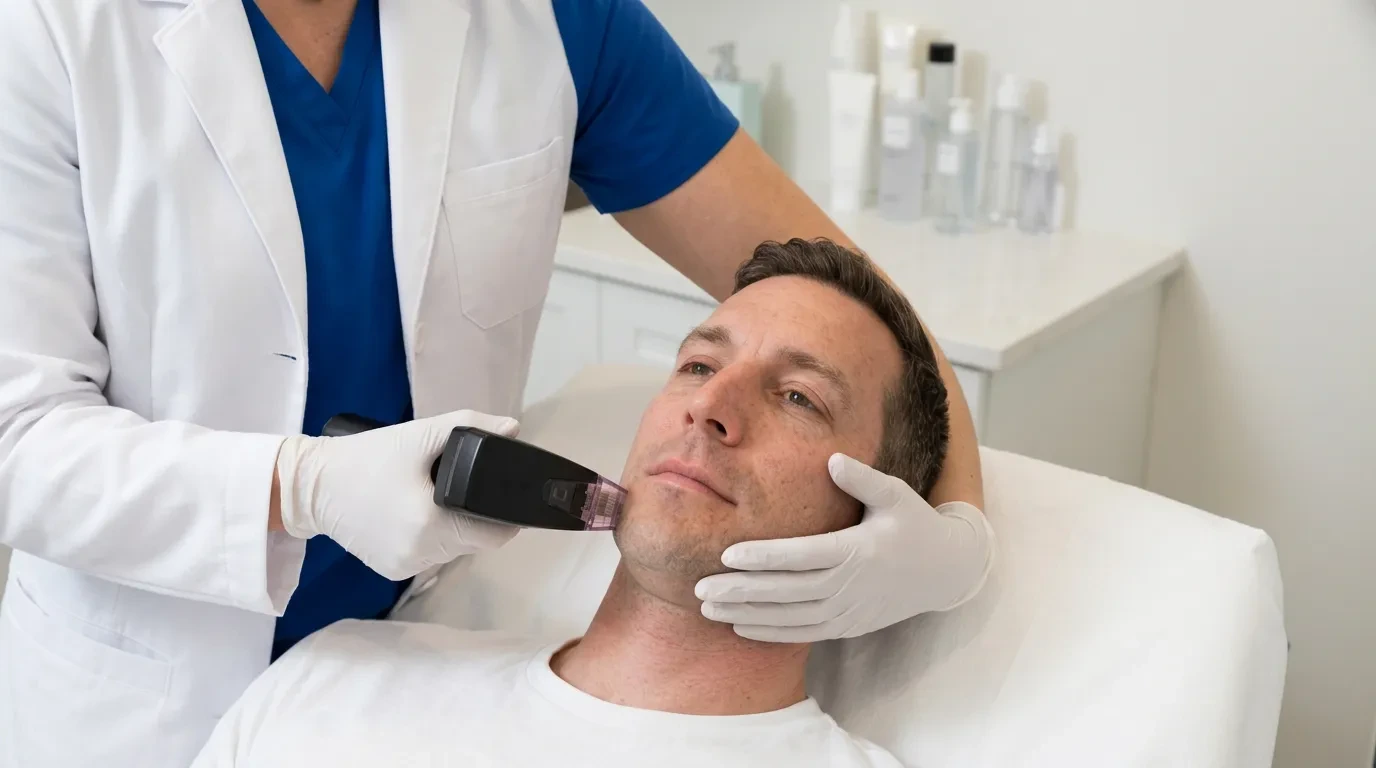
Morpheus8
A skin treatment used to tighten and smooth crinkled lower-lid skin. It is delivered by the clinical team under Dr. Tumi's direction.
People whose lower-lid skin has thinned and crinkled, so it folds and holds shadow even where there is no bag beneath it.
It works on the quality of the skin rather than on fat or on volume, tightening and smoothing the surface that is folding.
The improvement comes on over three to six months. The timeline for your case is confirmed at the consultation.
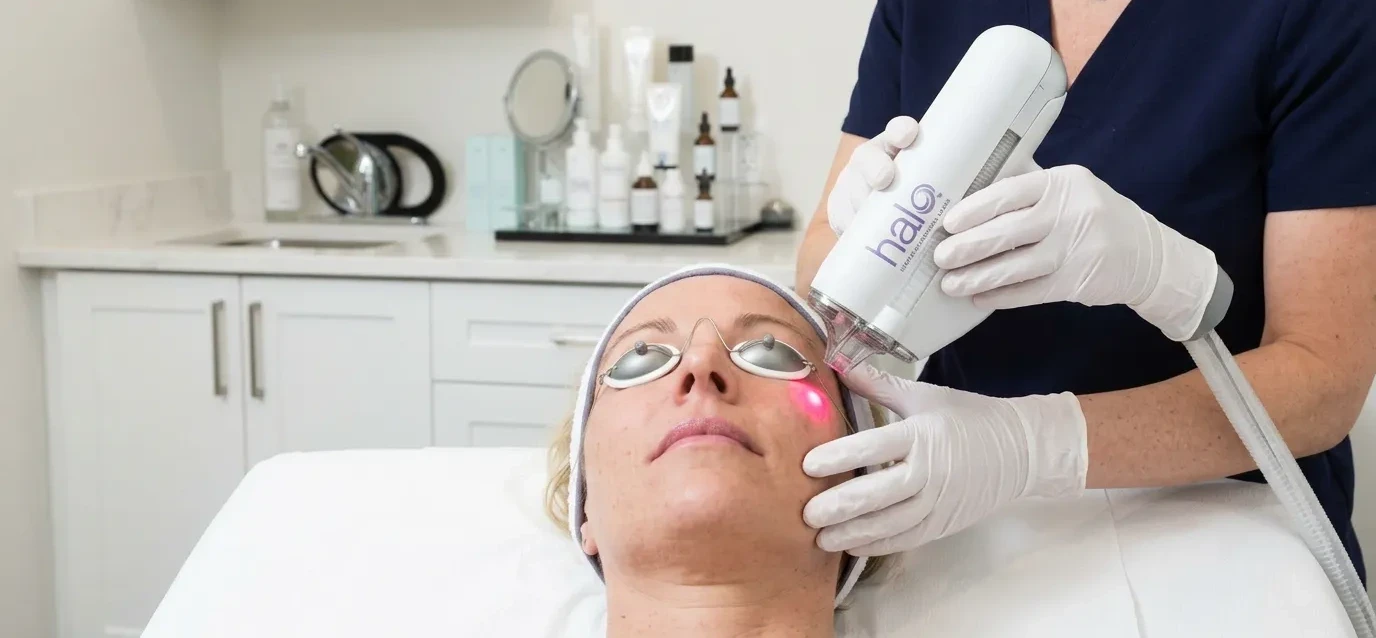
Laser Resurfacing and BBL
Laser and light treatment of the under-eye skin. Resurfacing tightens and smooths crinkled skin, and BroadBand Light (BBL) is used where the darkness is pigment. Both are delivered by the clinical team under Dr. Tumi's direction.
People whose skin is crinkled rather than bulging, and people whose darkness is the color of the skin itself or vessels showing through very thin skin, which neither volume nor surgery changes.
Resurfacing works on the texture of the skin. Where the darkness is pigment or thin skin, the route is a skincare, peel or BBL conversation rather than filler or surgery.
Resurfacing improves the skin over three to six months. The timeline for your case is confirmed at the consultation.
Canthopexy is not a route on its own here. It is added to lower blepharoplasty when the lower lid needs support.
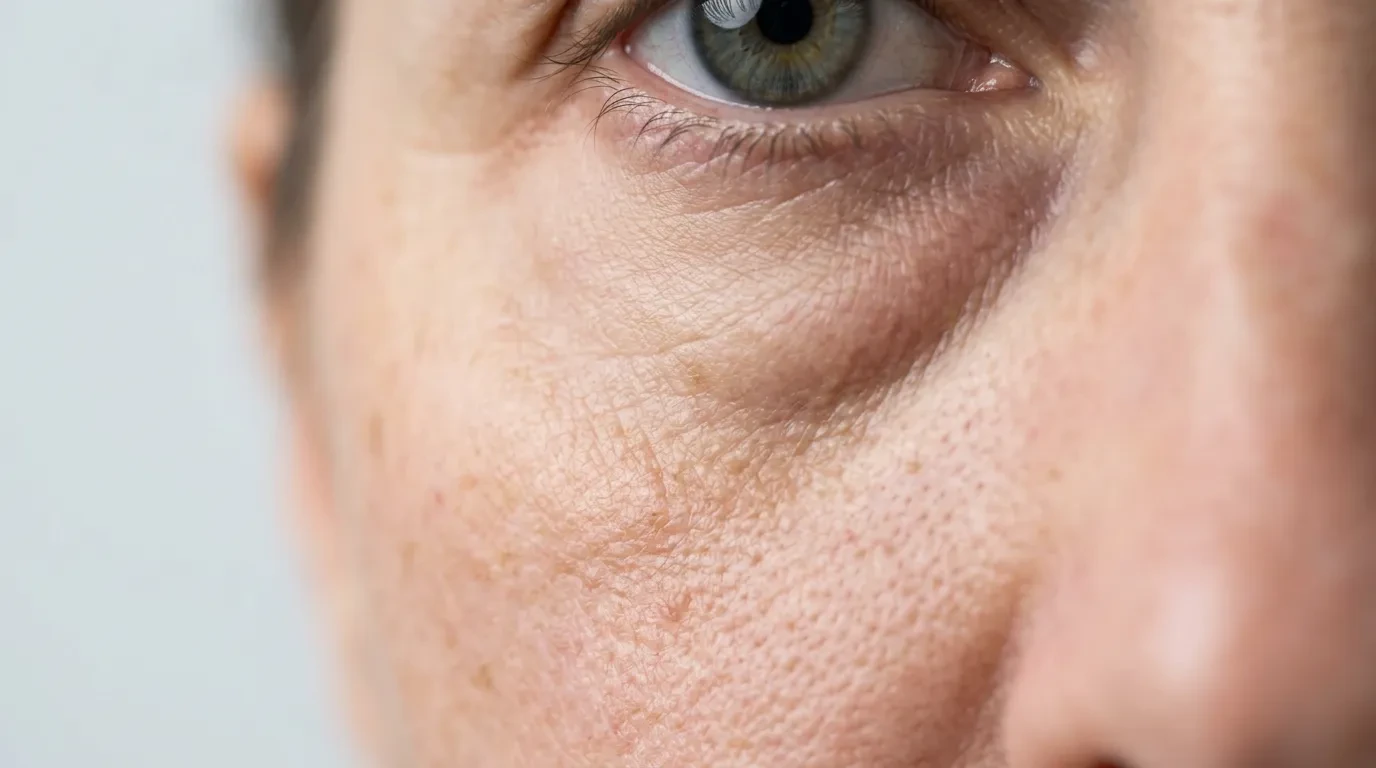
What to expect
After lower blepharoplasty, most patients are back at desk work in seven to ten days. Bruising is largely gone by two weeks. The last swelling settles over a month or two, and the result typically holds for ten years or more. Tear trough filler shows its result once a few days of swelling have settled, at about two weeks, and lasts twelve months or longer. Resurfacing and Morpheus8 improve the skin over three to six months. The timeline for your case is confirmed at the consultation. See before and after results
Cost
Fees are quoted at the consultation, once Dr. Tumi has seen whether the cause is fat, hollow, skin or pigment. Lower blepharoplasty, tear trough filler and skin treatments are different answers at different prices. You receive the figure in writing. Not covered by OHIP. Financing available through Beautifi, Medicard and Credit Medical.
Financing
Not covered by OHIP. Financing available through Beautifi, Medicard and Credit Medical.
Who provides your care
Surgeon-led care you can verify
You are assessed by Dr. Kamal Tumi, M.D., F.R.C.S.(C), a board-certified plastic surgeon with more than 28 years in practice and over 3,500 surgeries performed, and a consultant plastic surgeon at Royal Victoria Regional Health Centre since 2004. The surgeon who assesses you is the surgeon who operates. Injectable treatment is performed by Dr. Tumi himself. Non-surgical treatment is delivered by our trained clinical team under his direction, including Priscilla Carvalho, medical aesthetician, phlebotomist and skin therapist. Smoking materially affects healing for most procedures, which is why you will be asked about it. His CPSO registration is public and searchable.
“I will not do a surgery on you if you do not need it.”
An assessment and a conversation.
You do not need to arrive knowing which procedure you want. Describing what bothers you is enough. You are not committing to surgery by booking a consultation.
FAQ
About Barrie Plastic Surgery
Yes. He holds an M.D. and is certified by the Royal College of Physicians and Surgeons of Canada as a specialist in plastic surgery. That certification separates a plastic surgeon from a physician who offers cosmetic treatment. He has been a consultant plastic surgeon at Royal Victoria Regional Health Centre since 2004.
In everyday use they are used interchangeably, and both terms describe most of what we do. Strictly, plastic surgery is the recognized surgical specialty, which includes reconstructive work. Cosmetic surgery describes procedures done to change appearance. Dr. Tumi is qualified in the specialty.
It depends on the procedure. Some, including upper eyelid surgery, are done in our own office under local anesthetic. Larger procedures are booked in an operating room, and which setting applies to you is confirmed at your consultation.
Yes. Male patients are a normal part of the practice. Eyelid surgery and gynecomastia are the usual reasons, and skin procedures are common too. ---
Unit 24, 222 Mapleview Drive West in Barrie, just off Highway 400 at the Mapleview exit. Consultations, injectables and the office procedures happen here. Operations that need a general anesthetic are done at Royal Victoria Regional Health Centre, where Dr. Tumi has been a consultant plastic surgeon since 2004.
Dr. Tumi performs facial, breast and body surgery. Skin procedures are part of the practice too: mole removal, skin cancer removal, scar revision. On the non-surgical side he injects the neuromodulators and fillers himself. Laser, CoolSculpting, Morpheus8 and skin treatments are delivered by the clinical team under his direction.
Yes, for anything surgical, and for most non-surgical treatment too. The consultation is an examination and a conversation. Dr. Tumi looks at what is actually causing what you see, tells you what can and cannot be changed, and gives you a written quote afterwards. You are not asked to decide on the day.
Dr. Tumi performs every surgery and every injection himself. The surgeon who assesses you is the surgeon who operates. Laser, CoolSculpting, Morpheus8 and skin treatments are delivered by the clinic's trained clinical staff, under his direction.
Yes. Cosmetic procedures are not covered by OHIP, and we work with three financing providers: Beautifi, Medicard and Credit Medical. Every quote is given in writing at the consultation, so you know the full figure before you decide anything.
Dr. Tumi examines the area himself. He explains what he finds in plain language, including what he would not recommend, and offers the smaller option where one exists. You leave with a written quote and time to think. If nothing surgical is the honest answer, you will be told so.