
Sun Damage & Pigmentation
Sun Damage & Pigmentation
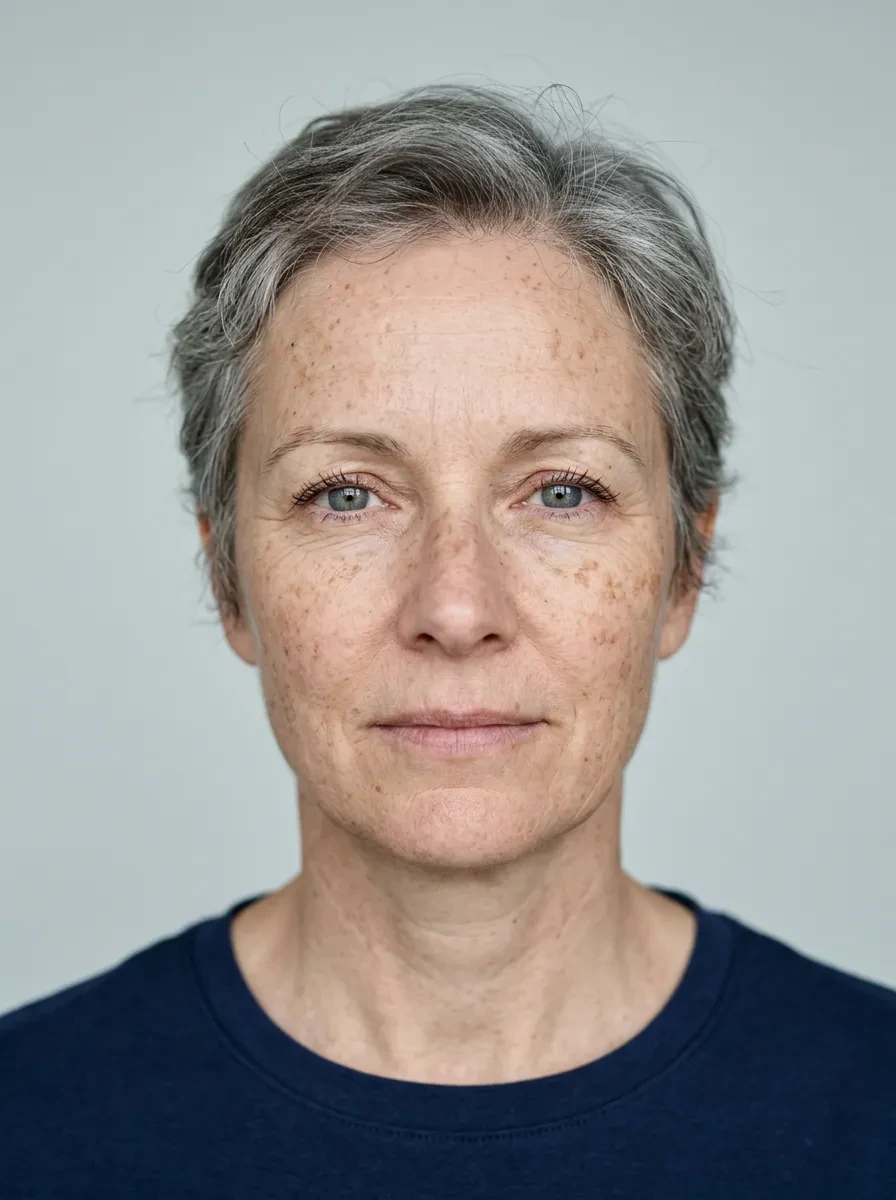
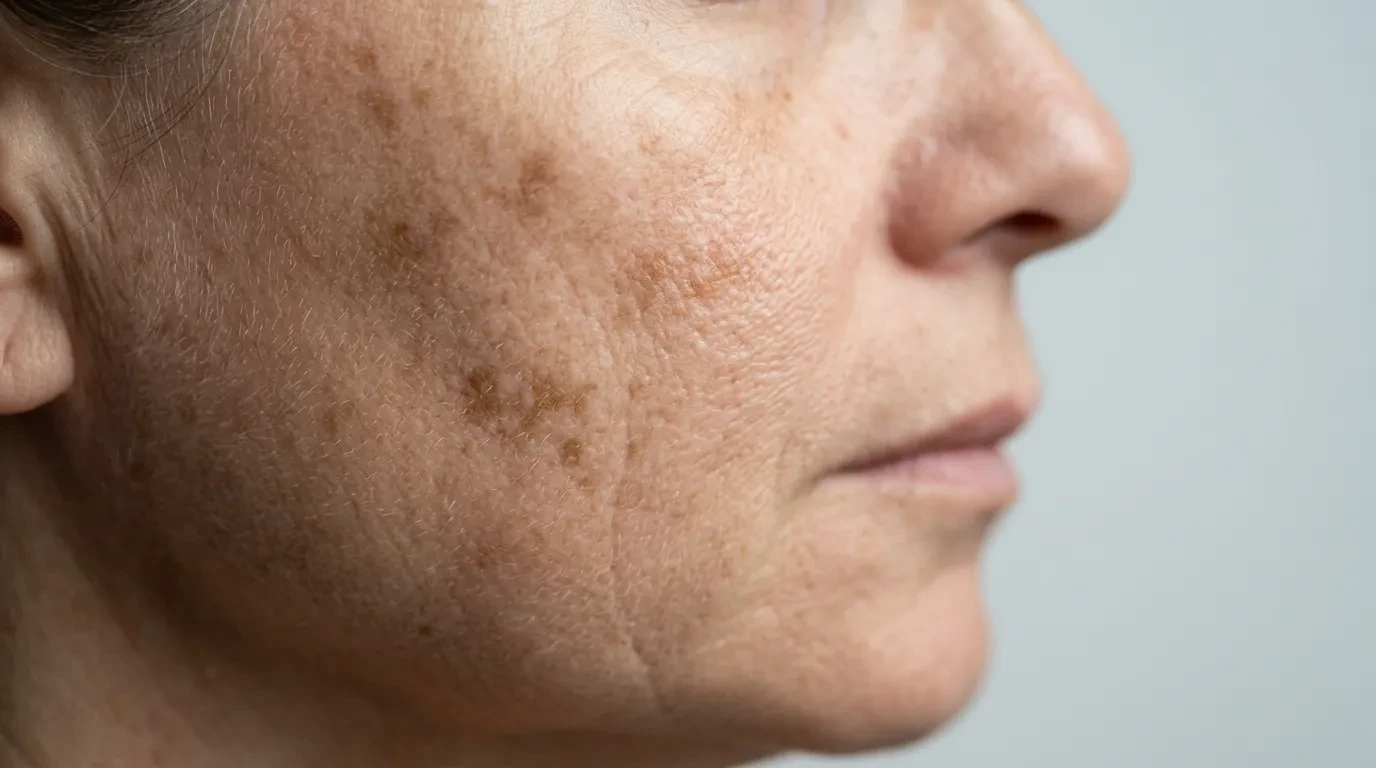
Brown spots and blotchy patches appear on the face, chest and hands. A Canadian summer leaves them behind. A winter does not take them away. Most people notice it in a bright bathroom mirror or in a photograph taken outdoors. Freckling has merged into patches. Brown spots sit on the cheeks and on the backs of the hands. The chest looks older than the face. Concealer smooths the unevenness for an hour. It is the sun, mostly, and it keeps arriving. The good news is that pigment is one of the most treatable things on the skin, provided the kind of pigment is identified first.
Sun Damage & Pigmentation
Sun Damage & Pigmentation
Brown spots and blotchy patches appear on the face, chest and hands. A Canadian summer leaves them behind. A winter does not take them away. Most people notice it in a bright bathroom mirror or in a photograph taken outdoors. Freckling has merged into patches. Brown spots sit on the cheeks and on the backs of the hands. The chest looks older than the face. Concealer smooths the unevenness for an hour. It is the sun, mostly, and it keeps arriving. The good news is that pigment is one of the most treatable things on the skin, provided the kind of pigment is identified first.
WHAT CAUSES IT
Why it happens
Not all brown is the same brown, and the kind decides the treatment. This is why the skin is assessed before a treatment is chosen. The same appearance can have different causes, and the right treatment follows the cause.
01
Sun spots and freckling
Flat brown spots and merged freckles from years of ultraviolet exposure, on the face, chest, arms and hands.
02
Melasma
Symmetrical patches on the cheeks, forehead and upper lip driven by hormones and heat as well as sun, which can worsen with the wrong treatment.
03
Post-inflammatory marks
Brown or red marks left where spots, injuries or treatments inflamed the skin, more common in darker skin types.
04
Texture and redness alongside
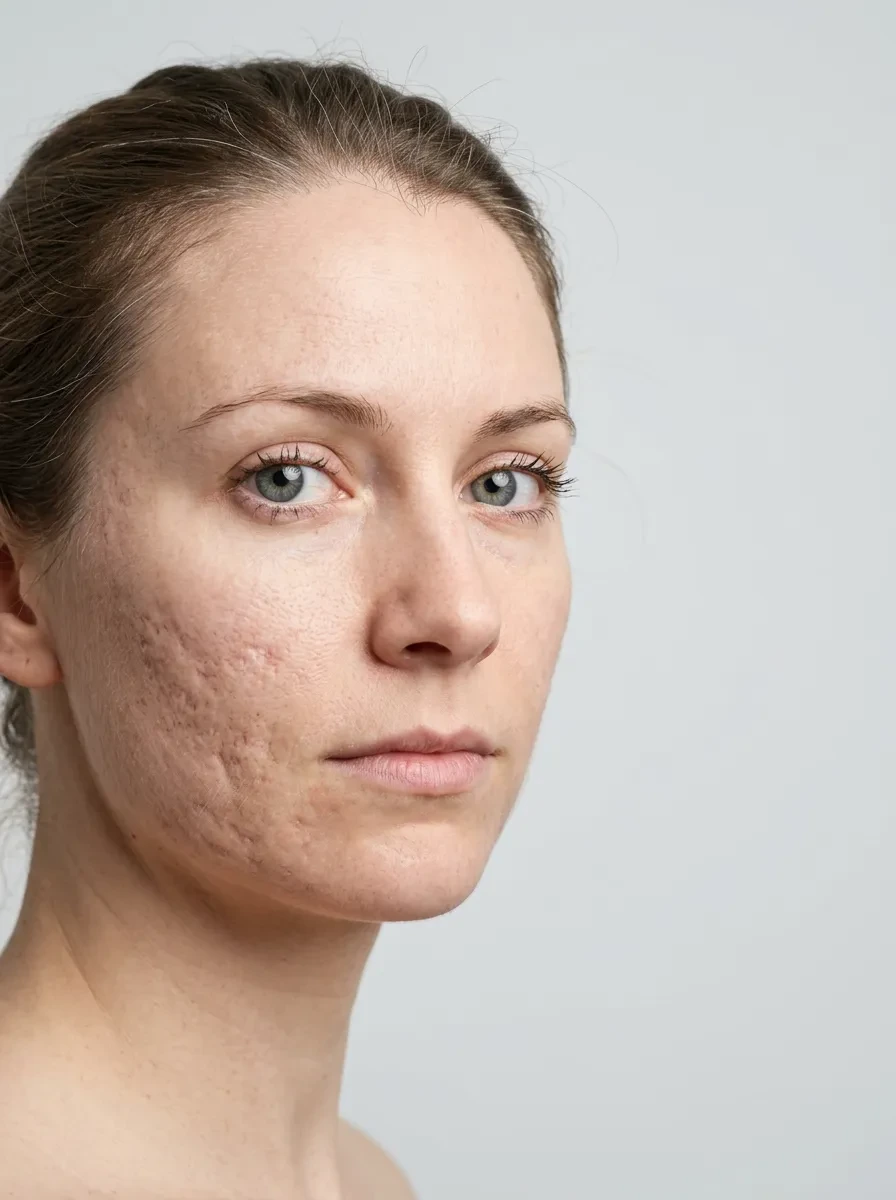
Sun damage rarely comes alone: rough texture, fine lines and broken capillaries usually arrive with it.
WHAT ACTUALLY TREATS IT
What actually treats sun damage and pigmentation in Barrie
Not all brown is the same brown, and the kind of pigment decides the treatment. Both surgical and non-surgical treatment is available here, so the plan follows what your skin is actually doing rather than one option.
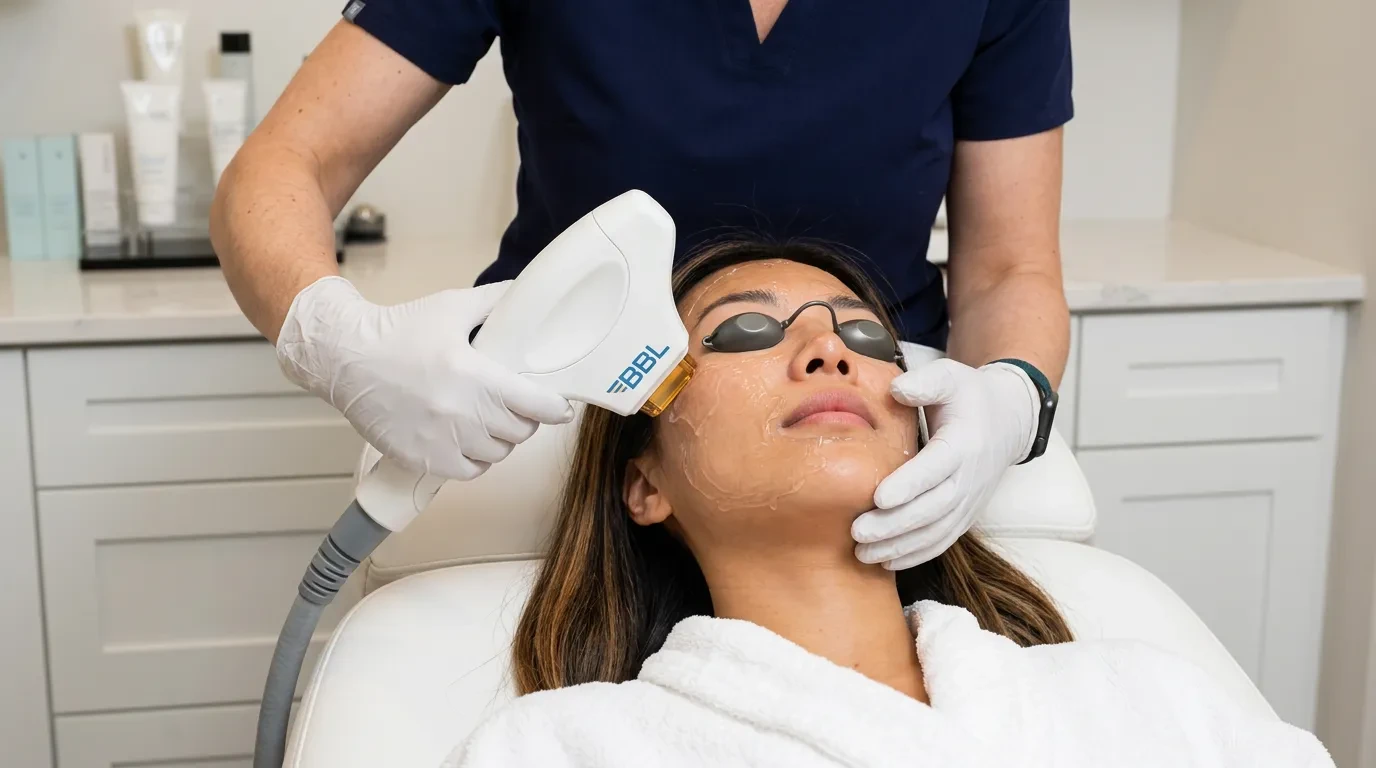
BBL Photofacial
A light treatment on the Sciton platform for sun spots and freckling. These are the flat brown spots and merged freckles left by years of ultraviolet exposure.
For flat brown spots and merged freckles on the face, chest, arms and hands. It is not the first treatment for melasma, and it is not used on a tan, because light and heat can make both darker.
The spots darken over a day or two and flake away over one to two weeks, with the skin clearer after each session. The spots cleared do not come back, though new sun brings new ones. Light treatment is delivered by the trained clinical team under Dr. Tumi's direction.
Two to three sessions, with a maintenance session once or twice a year. Daily sunscreen afterwards is part of the plan, because any treatment without it is undone by the next summer.
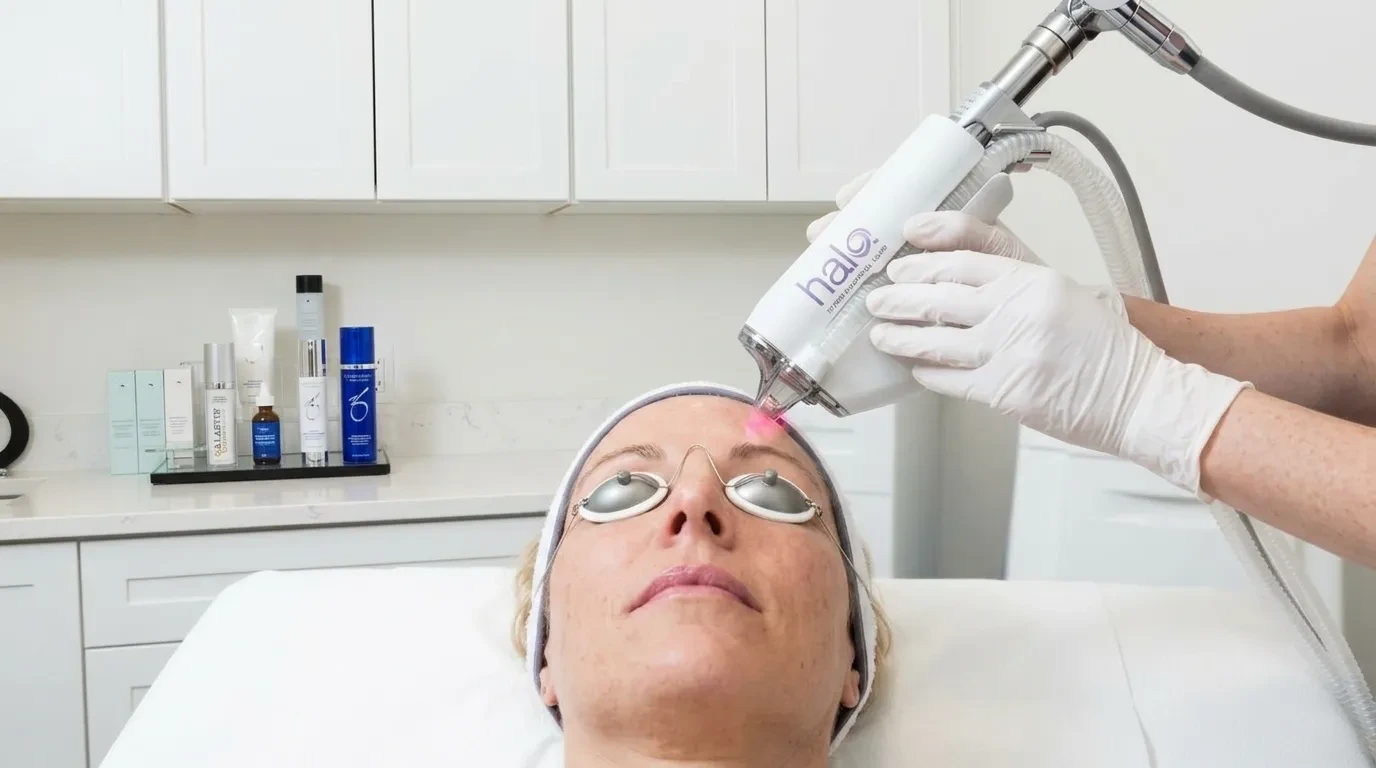
HALO Laser
A resurfacing laser that treats pigment and texture at the same time. It is aimed at the surface of the skin as well as at the color in it.
For sun damage that has not arrived alone. Rough texture, fine lines and broken capillaries usually come with the pigment, and this is the route when both the color and the surface need treating.
Resurfacing treats the pigment and the texture in one course rather than in two. Laser treatment is delivered by the trained clinical team under Dr. Tumi's direction.
A few days of downtime. Clarity shows at two weeks and keeps improving for months.
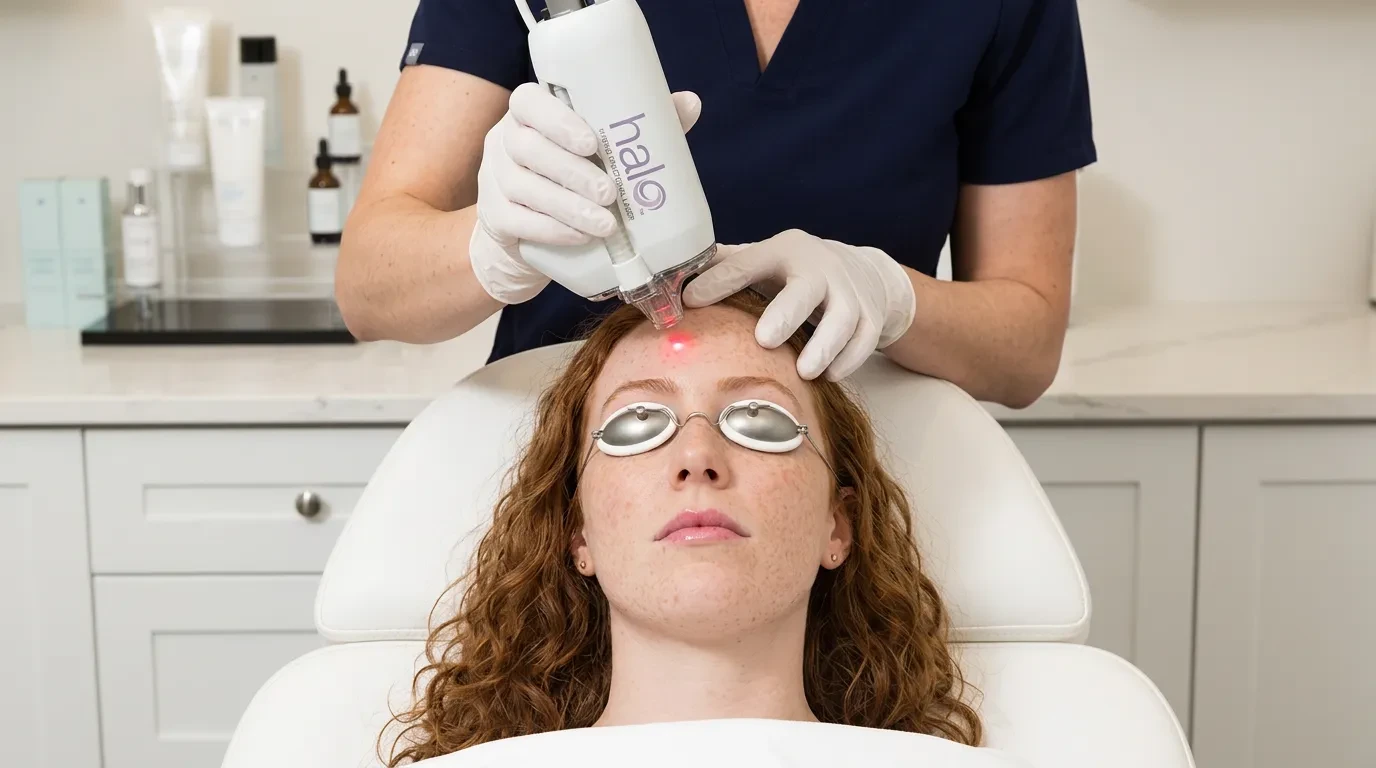
Laser Peels
A laser peel that resurfaces pigment together with the texture and lines around it. It does the same job as Halo, and the two are the resurfacing options here.
For the same picture as Halo, pigment that has come with texture and lines. Which of the two suits your skin is decided at the consultation, with your skin type and history in hand.
Like Halo, a laser peel resurfaces both the pigment and the surface it sits in at once. It is delivered by the trained clinical team under Dr. Tumi's direction.
A few days of downtime. Planned and priced as a series, with the plan confirmed at the consultation.
Chemical Peels
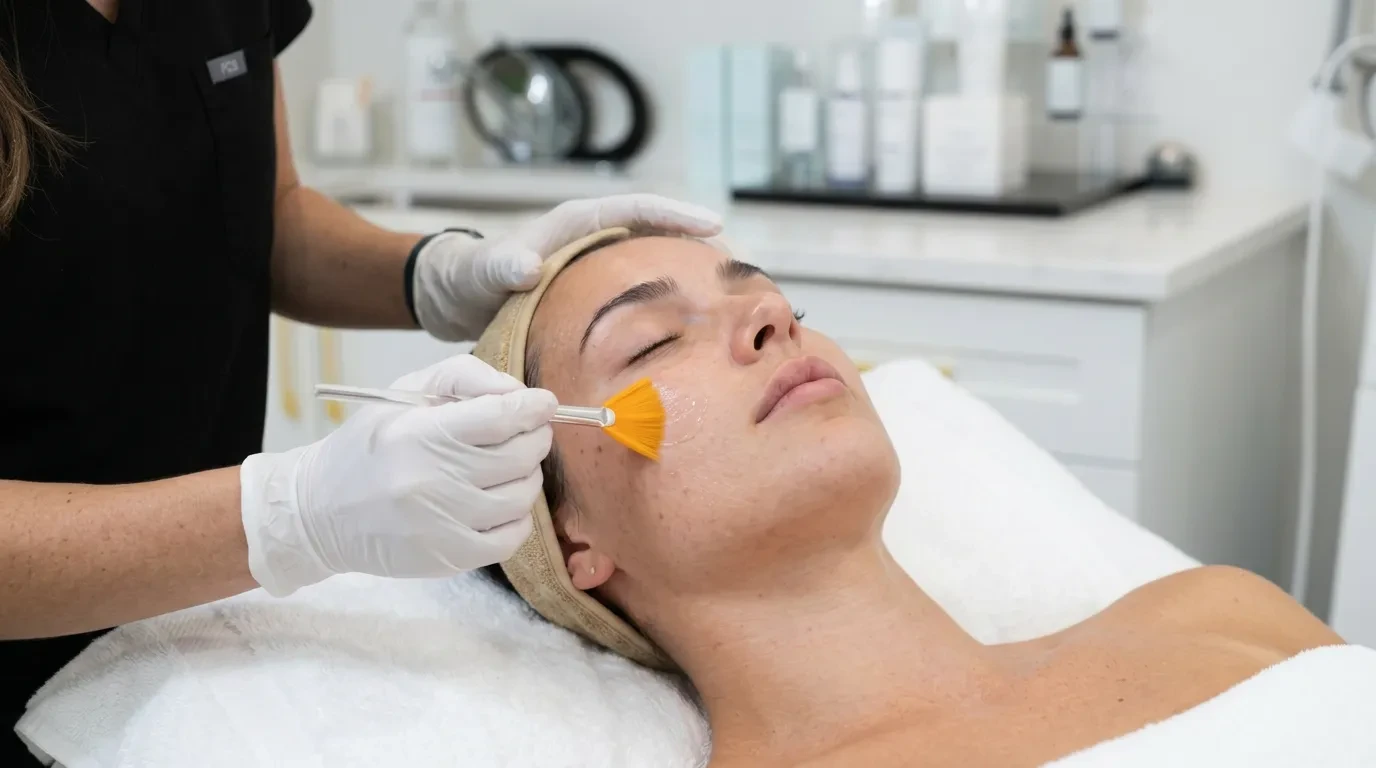
A series of peels, used where light treatment is the wrong first move. That means melasma, and the brown or red marks left behind by inflammation.
For melasma, the symmetrical patches on the cheeks, forehead and upper lip driven by hormones and heat as well as sun. Also for post-inflammatory marks, the brown or red marks left where spots, injuries or treatments inflamed the skin.
Light and heat can make melasma worse, so melasma is treated cautiously, with skincare, gentle peels and strict sun protection first. At-home peels and scrubs irritate the skin and can leave more pigment behind, particularly in darker skin. Peels are delivered by the trained clinical team under Dr. Tumi's direction.
Peels build their result over a series and are priced as a series. Strict sun protection is part of the plan from the start.
CIMEL
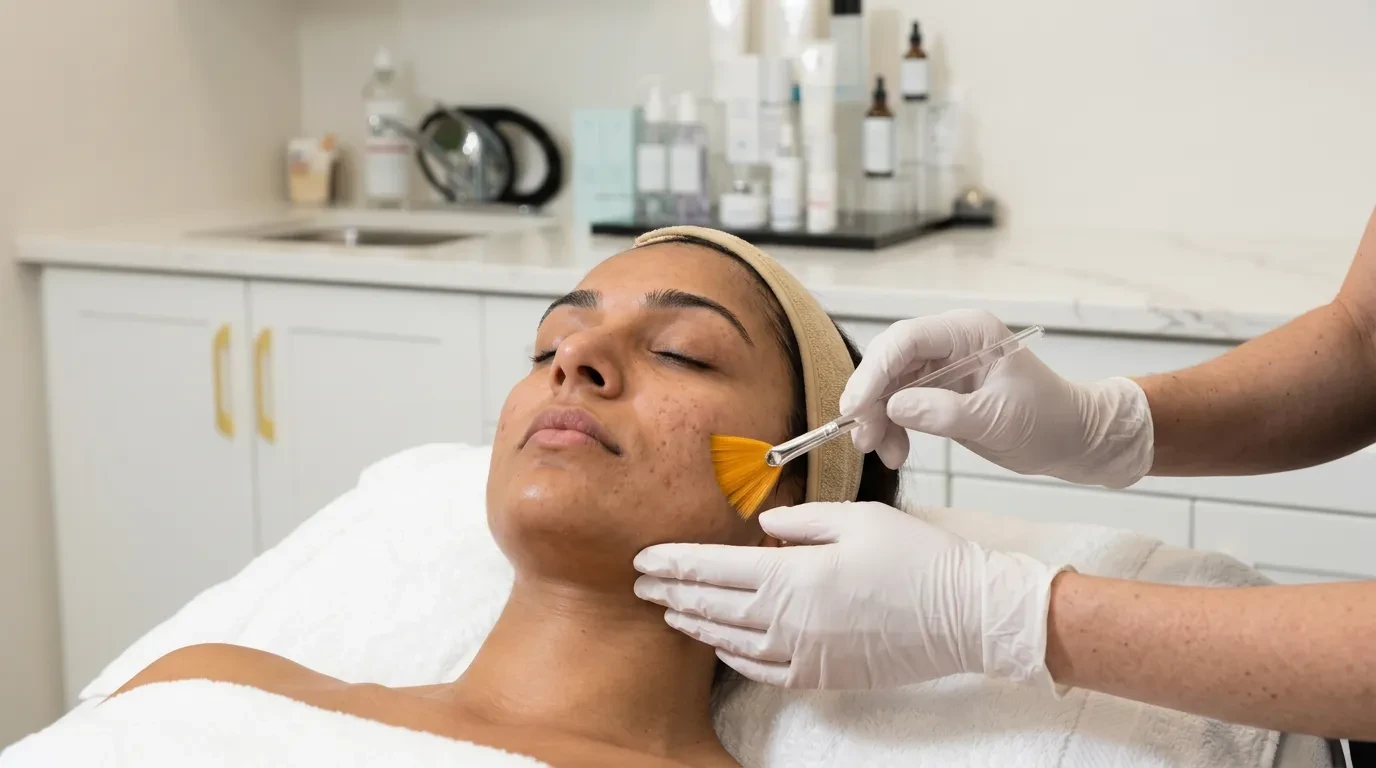
A peel used for post-inflammatory marks in sensitive and darker skin. It is one of the two peel routes for the marks inflammation leaves behind.
For brown or red marks left where spots, injuries or treatments inflamed the skin, which are more common in darker skin types. It is the route when a standard peel or a light treatment is not the right choice for your skin.
Darker and sensitive skin can be left with more pigment by the wrong treatment, so the kind of pigment and your skin type are identified before anything is chosen. It is delivered by the trained clinical team under Dr. Tumi's direction.
The number of sessions and the plan are set at the consultation. Daily sunscreen is part of every plan here.
Daily sunscreen is part of every one of these plans, and the only part that is free.
Brightening creams lighten a little and slowly, and cannot clear a spot.
Light treatment on melasma, or on a tan, can make the pigment darker, which is why the kind of pigment is identified before anything is chosen.
What to expect
After BBL, the spots darken over a day or two. They flake away over one to two weeks. The skin is clearer after each of the two to three sessions. Spots that clear do not come back, though new sun brings new ones. Halo shows its clarity at two weeks and keeps improving for months. Peels build their result over a series. The plan and timeline for your skin are confirmed at the consultation. See before and after results
What will not fix it
Brightening creams lighten a little and slowly, and cannot clear a spot. Scrubs and at-home peels irritate the skin and can leave more pigment behind, particularly in darker skin. Light treatment on melasma, or on a tan, can make it darker. And any treatment without daily sunscreen afterwards is undone by the next summer. This is worth saying plainly, because it is where people spend the most money for the least change.
Cost
Fees are quoted at the consultation, once your skin has been seen and the kind of pigment identified. BBL, Halo, laser peels and chemical peels are different treatments, and each one is priced as a series. You receive the figure in writing. Not covered by OHIP. Financing available through Beautifi, Medicard and Credit Medical.
Financing
Not covered by OHIP. Financing available through Beautifi, Medicard and Credit Medical.
Who provides your care
Surgeon-led care you can verify
You are assessed by Dr. Kamal Tumi, M.D., F.R.C.S.(C), a board-certified plastic surgeon with more than 28 years in practice and over 3,500 surgeries performed, and a consultant plastic surgeon at Royal Victoria Regional Health Centre since 2004. The surgeon who assesses you is the surgeon who operates. Injectable treatment is performed by Dr. Tumi himself. Non-surgical treatment is delivered by our trained clinical team under his direction, including Priscilla Carvalho, medical aesthetician, phlebotomist and skin therapist. Smoking materially affects healing for most procedures, which is why you will be asked about it. His CPSO registration is public and searchable.
“I will not do a surgery on you if you do not need it.”
An assessment and a conversation.
You do not need to arrive knowing which procedure you want. Describing what bothers you is enough. You are not committing to surgery by booking a consultation.
FAQ
About Barrie Plastic Surgery
Yes. He holds an M.D. and is certified by the Royal College of Physicians and Surgeons of Canada as a specialist in plastic surgery. That certification separates a plastic surgeon from a physician who offers cosmetic treatment. He has been a consultant plastic surgeon at Royal Victoria Regional Health Centre since 2004.
In everyday use they are used interchangeably, and both terms describe most of what we do. Strictly, plastic surgery is the recognized surgical specialty, which includes reconstructive work. Cosmetic surgery describes procedures done to change appearance. Dr. Tumi is qualified in the specialty.
It depends on the procedure. Some, including upper eyelid surgery, are done in our own office under local anesthetic. Larger procedures are booked in an operating room, and which setting applies to you is confirmed at your consultation.
Yes. Male patients are a normal part of the practice. Eyelid surgery and gynecomastia are the usual reasons, and skin procedures are common too. ---
Unit 24, 222 Mapleview Drive West in Barrie, just off Highway 400 at the Mapleview exit. Consultations, injectables and the office procedures happen here. Operations that need a general anesthetic are done at Royal Victoria Regional Health Centre, where Dr. Tumi has been a consultant plastic surgeon since 2004.
Dr. Tumi performs facial, breast and body surgery. Skin procedures are part of the practice too: mole removal, skin cancer removal, scar revision. On the non-surgical side he injects the neuromodulators and fillers himself. Laser, CoolSculpting, Morpheus8 and skin treatments are delivered by the clinical team under his direction.
Yes, for anything surgical, and for most non-surgical treatment too. The consultation is an examination and a conversation. Dr. Tumi looks at what is actually causing what you see, tells you what can and cannot be changed, and gives you a written quote afterwards. You are not asked to decide on the day.
Dr. Tumi performs every surgery and every injection himself. The surgeon who assesses you is the surgeon who operates. Laser, CoolSculpting, Morpheus8 and skin treatments are delivered by the clinic's trained clinical staff, under his direction.
Yes. Cosmetic procedures are not covered by OHIP, and we work with three financing providers: Beautifi, Medicard and Credit Medical. Every quote is given in writing at the consultation, so you know the full figure before you decide anything.
Dr. Tumi examines the area himself. He explains what he finds in plain language, including what he would not recommend, and offers the smaller option where one exists. You leave with a written quote and time to think. If nothing surgical is the honest answer, you will be told so.